Every page, explained.
In the order you meet them. The secretary says most of this on the first morning; this is where it is written down.
The front door
The first thing you see, every time. Each career on this device is a card: the club, the date, how many seasons, the last time you played. Play opens it, Delete ends it for good, Duplicate makes another copy to try something on. The first visit skips the list and starts a career.
Starting a career
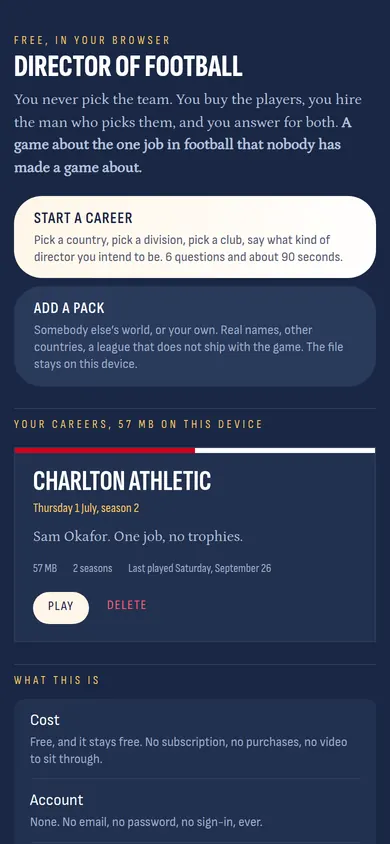
Pick a division, then a club. The card tells you what the club is: its ground, its standing, what the board expect, what money there is. Then you say what kind of director you are, in 2 pillars, and the papers describe you that way for as long as you are there.
The clock and the band
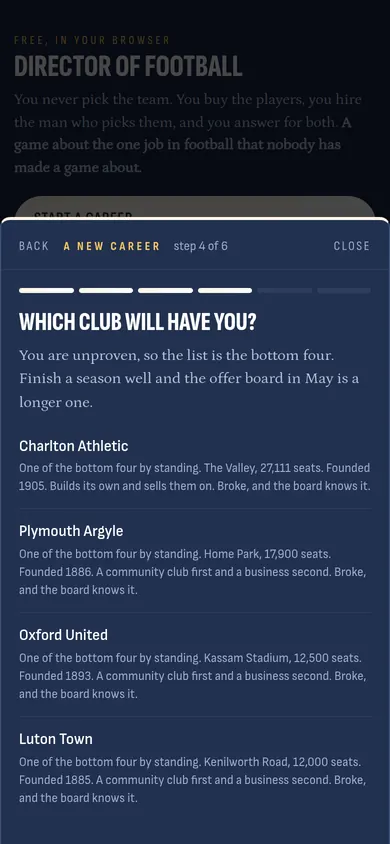
The band at the foot of every page carries the date, your last 5 results, the envelope, and Advance. The caret beside Advance picks how far: the next match, the end of the week, the end of the month, the next window. On deadline day it offers the day hour by hour, or the rest of it in one press. The clock stops on its own when something needs you: a bid for one of your men, a loan ask, a failed medical, the board's warning. You answer on the sheet and press on.
The box
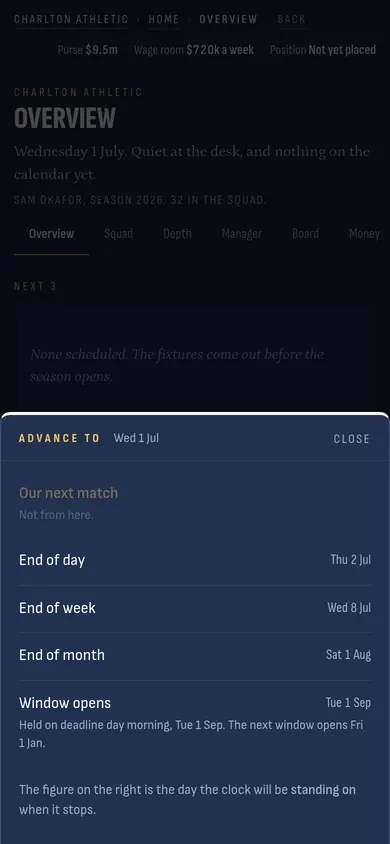
The envelope in the band. Everything that happened at your club that you did not have to stop for: injuries, contracts, the market, the board, the manager, the academy. 1 message per matter per press; they clear on 1 July. A message about a live matter carries its verbs, so a bid can be answered from the box.
The desk and the market
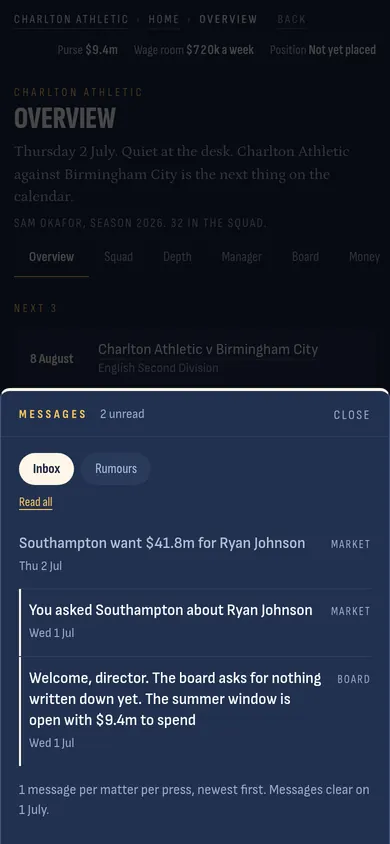
Enquire, bid, counter, agree terms. The other club quotes a price the next day; the man's own people quote his wage. Sell by listing him and answering what comes. The purse is the board's money for the season and both windows draw on it.
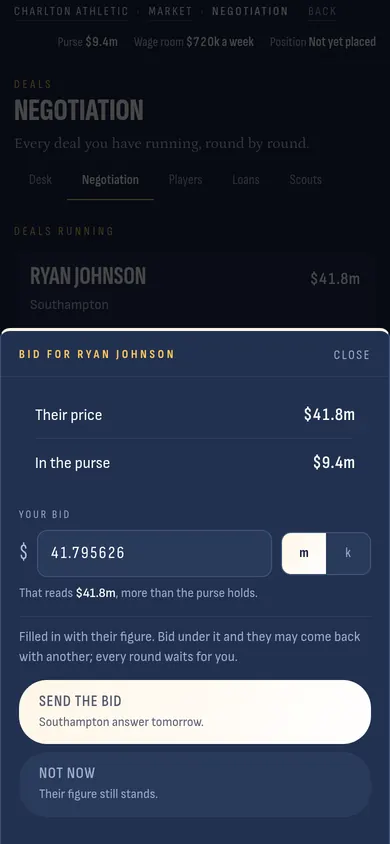
When the clock stops
A bid for your player, a failed medical, a board warning. The sheet names it, gives you the verbs, and says what silence costs. Leave it for now and the clock waits; unanswered bids keep their expiry.
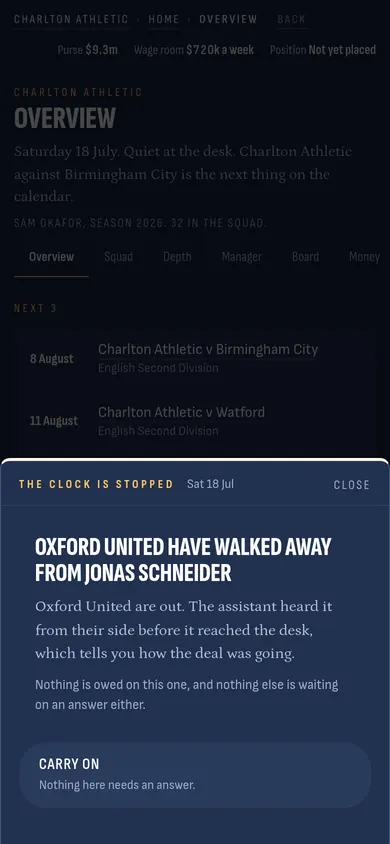
The manager
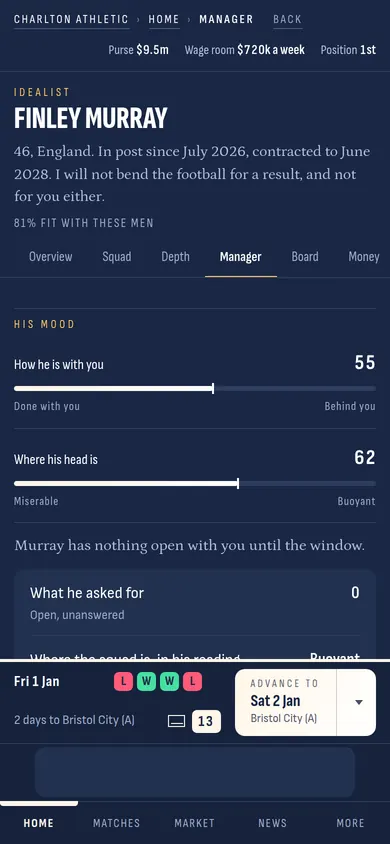
His page shows how he wants to play on 4 axes, how well he fits these men, what he is paid, what it costs to sack him today, and, first, his mood: what he thinks of you and where his own head is. Each window he asks for what he wants. Answer him and both figures move; leave him waiting and they move the other way. Replace him from the manager market, any day, if the purse can pay off what is left on his deal.
The board
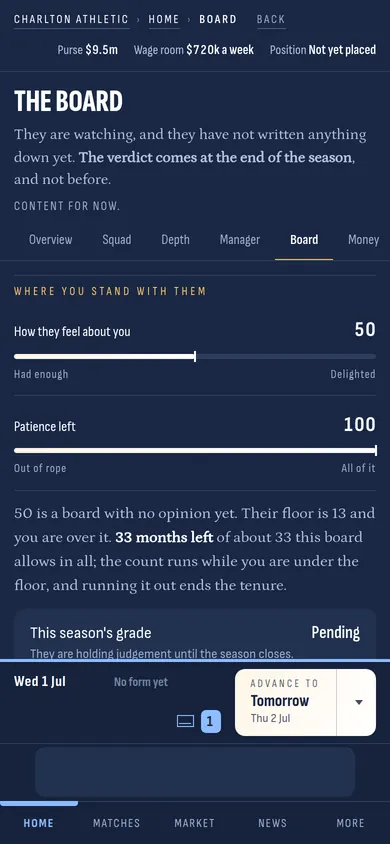
How they feel about you, their floor, and the patience they have left, all season. In September they write the objectives; on 30 June they grade the year on 4 counts. Through the season they put plans to you in the box, and now and then they take money back from the next window. Back a plan and they think a little more of you. Refuse a deduction and they keep the money anyway, and you fall under their floor.
The academy
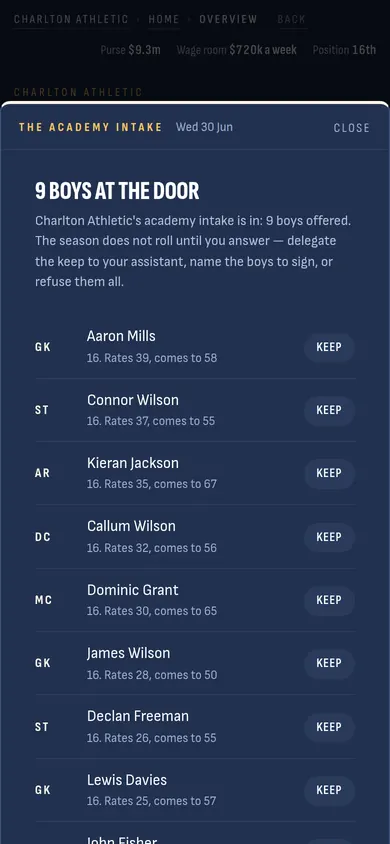
The boys arrive on 30 June and the clock waits for your answer: who is kept, who is released. The academy's own rating moves with what the club spends on it.
The season's end
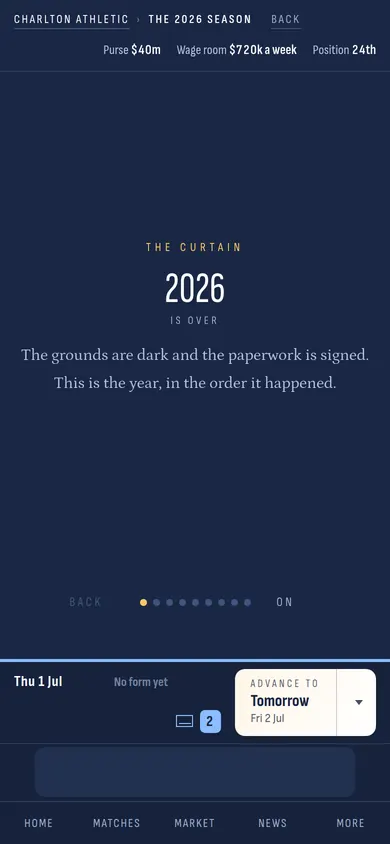
The last matches, the awards, the board's verdict in the box, the ceremony, and on 1 July the roll: the new season's money, the manager's word on the year, and, if the board have finished with you, the offer board with 2 or 3 clubs on it.
Words the game uses
Nothing on this page is a secret. The game shows you every figure it grades you on.